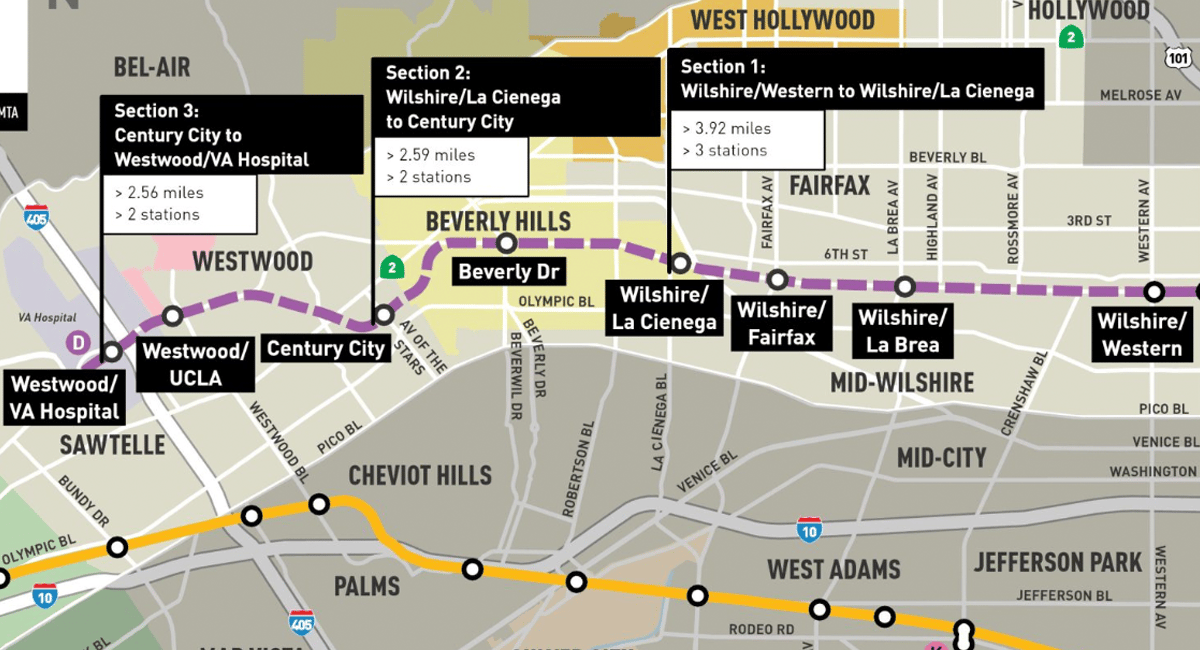
Imagine a Westside where weeknights feel lighter: fewer “I’ll stay in because parking,” fewer stress-commutes, and more spur-of-the-moment dinners that don’t require a strategy session. That’s the quiet promise of the Metro D Line (Subway) Extension, a project designed to make daily life smoother without asking anyone to give up what they love about their neighborhood.
Metro’s current timeline calls these “target opening dates”: Section 1: Winter 2026; Section 2: Spring 2026; Section 3: Fall 2027.
Why the Westside is especially well-suited to this kind of upgrade:
West LA is a place where time is a real luxury. A City of Los Angeles Planning demographic profile notes median household income of $117,738 and that 40.3% of households are one-person households. That often translates into a strong appetite for “convenience that feels elegant” and mobility choices that reduce friction, even for people who still prefer to drive most days.
What this looks like in real life:
The biggest change is not a dramatic reinvention. It’s a gentler routine, with better options.
A few everyday wins residents tend to notice first:
- Easier evenings out: dinner, a movie, a museum, without building your night around parking
- Smoother access to major destinations along Wilshire and into Westwood
- More independence for teens, older family members, and visiting friends
- Fewer short car trips for quick errands when you’d rather walk, ride, or take a single stop
Think of it as adding a new doorway to the city. You may not use it every day, but you’ll love knowing it’s there.
The property value piece:
Access matters in real estate because buyers pay for what makes life easier. One Los Angeles County analysis using Trulia data found that, for the lowest-priced three-quarters of listings, homes that mentioned transit keywords (like “metro” or “subway”) sold for an average premium of 4.2% compared to similar listings that didn’t. Research across many rail-station studies also finds that station access often shows up as a measurable “access premium,” though the size varies by neighborhood and home type.
Where the benefits tend to concentrate:
The happiest outcomes usually happen where transit access lands in a place that already functions well on foot. These neighborhoods will have a genuine errand mix nearby (grocery, pharmacy, coffee), connected sidewalks and comfortable lighting, and homes and larger residential or mixed-use buildings with practical ease (secure entry, package space, good storage).
A hopeful note on change:
Westside neighborhoods are right to care deeply about quality of life. The best version of the next chapter is not louder or harsher. It’s simply more connected, with more choices, and a little more time returned to residents every week.
The D Line Extension is not a personality shift for the Westside. It’s a refinement: a future where the neighborhood you love is still the neighborhood you love, just easier to live in.