Deciding between a condo and a house in Santa Monica can feel like two great options pulling you in different directions. You want the beach, walkable streets, and a smart long-term move that fits your budget and lifestyle. In this guide, you will compare costs, neighborhoods, rules, and daily-life tradeoffs so you can choose with confidence. Let’s dive in.
Santa Monica market snapshot
Santa Monica’s condo and single-family markets serve different price tiers, and they behave differently. Recent local reporting shows a wide gap between median sold prices. Condos tend to sell around the low $1 millions, while single-family homes skew much higher. Inventory and days on market also differ, which affects how fast you need to move and how you negotiate.
Here is a quick, date-stamped snapshot using late 2025 figures to frame the decision:
| Property type | Median sold price (Nov 2025) | Market feel in late 2025 | Typical buyer price band |
|---|---|---|---|
| Condos | ≈ $1.26M | More balanced, longer DOM, higher months of inventory | About $1M to $1.4M for many 1–2 BRs |
| Single-family homes | ≈ $3.33M | Tighter seller market, lower months of inventory | About $2.5M to $4M+ for many SFRs |
Neighborhood tiers matter too:
- North of Montana (90402): among the city’s highest price points, mostly single-family homes with multi-million values.
- Ocean Park (90405): a mix of condos and smaller homes in the low-to-mid millions, close to beach life.
- Wilshire-Montana, Downtown, parts of 90403/90404: strong condo inventory, walkability, and smaller SFRs at varied prices.
The takeaway: condos offer location and lower hands-on maintenance at a lower buy-in. Houses offer privacy, land, and long-term potential if you can stretch the budget.
What it costs to own
Owning in Santa Monica comes with recurring costs that look different for condos versus houses. Comparing line by line will make your decision clearer.
Mortgage and financing
Condo loans have a few extra checks. Lenders review the building’s finances, reserves, owner-occupancy levels, insurance, and any litigation. This can affect your loan options and timeline. Get pre-approved early and ask your lender to confirm condo requirements upfront.
Property taxes in LA County
California’s Proposition 13 sets a base property tax of 1 percent of assessed value. With local add-ons, many Santa Monica buyers see effective rates in the 1.1 to 1.3 percent range. Expect a supplemental bill if your assessed value changes after purchase. You can learn more in a clear overview of California’s property tax system and county effective rates, and you can verify parcel details through the Los Angeles County property appraiser:
- Learn how effective rates work statewide: California property tax trends
- Check parcel assessments and rules: LA County Property Appraiser
HOA fees vs single-family carrying costs
Condo HOA dues vary based on amenities and services. In Santa Monica, you may see a few hundred dollars per month in smaller buildings and up to $1,000 to $2,500 or more in full-service properties with pools, gyms, and security. Buyers of single-family homes take on yard care, roof and exterior maintenance, and all systems directly.
Maintenance and reserves
A common planning rule is to set aside 1 to 4 percent of the home’s value per year for maintenance and repairs. Newer homes tend to be on the lower end, while older properties trend higher. For budgeting, start with about 1 to 2 percent and adjust for age, condition, and complexity. See more about the 1 to 4 percent rule here: home maintenance budgeting guidance.
Insurance and earthquake coverage
- Condos: You typically carry an HO-6 policy that covers personal property, walls-in improvements, and liability. The HOA usually holds a master policy for the building shell and common areas. Confirm if the HOA’s master policy is “bare walls” or “all-in,” and how deductibles are handled.
- Houses: You carry a traditional homeowners policy that covers the structure, contents, and liability.
- Earthquake: In California, earthquake insurance is a separate policy available through the California Earthquake Authority or private carriers. Premiums vary by location, building, coverage, and deductible. Learn the basics and explore options through the state portal: California Earthquake Authority info.
Worked monthly cost examples
Below are simplified illustrations to help you compare. Your actual numbers will depend on price, rate, down payment, taxes, insurance quotes, HOA dues, and maintenance needs.
Example A: $1.30M condo purchase
- Mortgage principal and interest: varies by rate and down payment
- Property tax: roughly $1.30M × 1.2 percent ≈ $1,300 per month
- HO-6 insurance: example placeholder $60 to $120 per month
- Earthquake: varies widely, example placeholder $100 to $250 per month
- HOA dues: example range $600 to $1,500 per month depending on amenities
- Maintenance reserve: 1.5 percent of price per year ≈ $1,625 per month ÷ 12 ≈ $162 per month (adjust for building age and HOA coverage)
Example B: $3.30M single-family home purchase
- Mortgage principal and interest: varies by rate and down payment
- Property tax: roughly $3.30M × 1.2 percent ≈ $3,300 per month
- Homeowners insurance: example placeholder $150 to $300 per month
- Earthquake: varies widely, example placeholder $250 to $600 per month
- Yard and services: example placeholder $200 to $600 per month
- Maintenance reserve: 1.5 percent of price per year ≈ $4,125 per month ÷ 12 ≈ $344 per month (older homes may need more)
Use these as starting points to compare total monthly cost, then refine with lender quotes, insurance bids, and actual HOA disclosures.
Lifestyle tradeoffs that decide it
Walkability, transit, and daily life
Santa Monica has strong walkability, especially Downtown, Wilshire-Montana, and near-beach districts. Many buyers choose condos in these pockets to live a car-optional lifestyle close to shops, dining, and the beach. Check local scores and transit access, including the Metro E Line, to match your routine: Santa Monica Walk Score and transit view.
Privacy, outdoor space, and storage
- Single-family homes: More private outdoor space, room for gardening, pets, and potential ADUs with proper permitting. Often more storage and garage space.
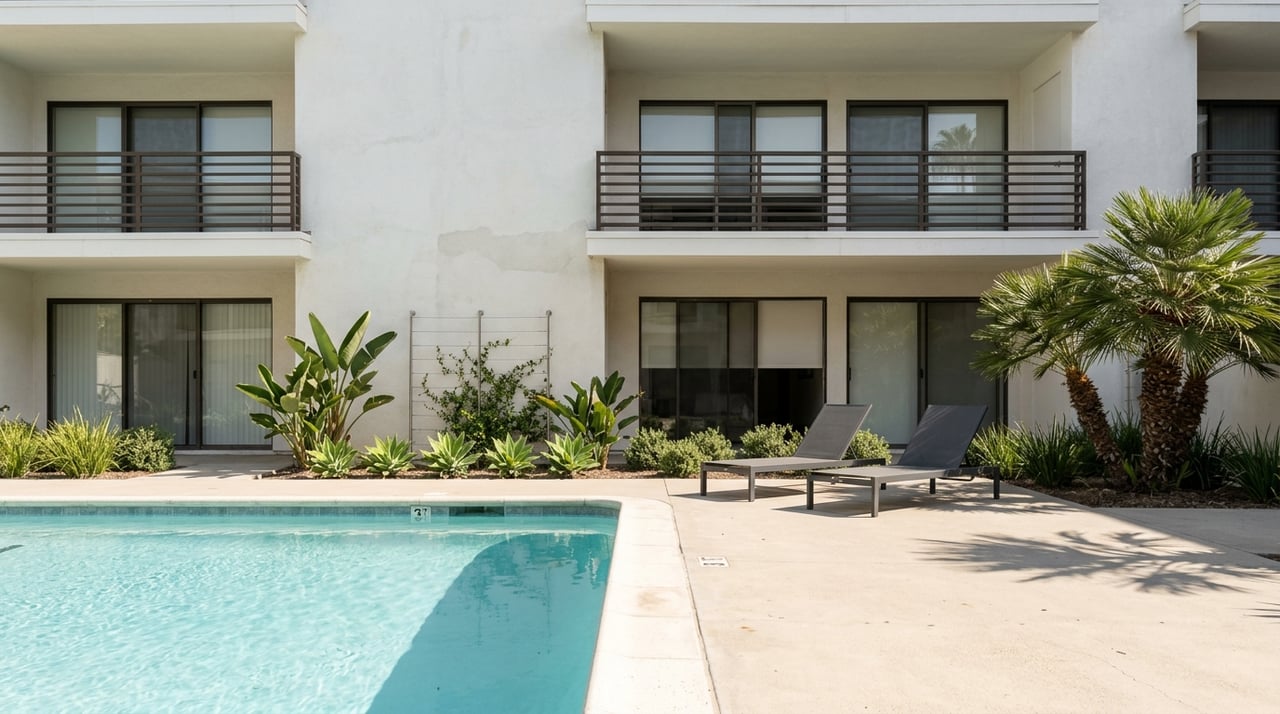
- Condos: Less private outdoor area, but less hands-on maintenance and time saved on yard work. Many buildings offer amenities like pools and gyms.
Parking and beach-adjacent realities
Parking near the beach can be tight. Many condos include assigned garage spaces, but always confirm the number of spaces, location, and any restrictions in the HOA rules. For single-family homes, review driveway and street-parking regulations, especially during peak seasons or events.
Schools and buyers with education needs
Public school quality can be part of the decision for some buyers. If school data matters to you, review independent sources and district resources. For example, Roosevelt Elementary’s profile on GreatSchools shows how third-party sites present public information. Always verify current boundaries and enrollment policies with the district.
Local rules to know before you decide
Home-sharing and short-term rentals
Santa Monica allows hosted home-sharing with a city license. Un-hosted short-term vacation rentals under 31 days are not permitted in most residential areas. Always confirm HOA rules on rentals too. See the city’s guidance: How to apply for a Home-Share Business License.
Rent control and tenancy rules
Santa Monica’s rent control framework applies to certain units based on construction date and other factors. If you plan to rent out your property, review eligibility and rules before you buy. Start here: Santa Monica rent control overview.
Coastal zone and permitting
Homes near the shoreline may fall within the Coastal Zone, which can add steps for remodels, additions, or construction. Budget extra time and costs if your plan includes major exterior changes. Learn more about coastal permitting and enforcement: California Coastal Commission enforcement.
HOA diligence for condos
Ask for the full resale package and review:
- Reserve study and percent funded
- Most recent budget and any dues increases
- Meeting minutes for the past 12 months
- Pending or recent special assessments
- Master insurance policy type and deductibles
- Parking, storage, guest, and rental rules
Property condition diligence for houses
Order, at minimum: a general home inspection, termite and wood-destroying organism report, sewer scope for older homes, and roof or structural evaluations where appropriate. Verify the city permit history for any renovations and check for open violations.
Who is better served by each option?
These scenario snapshots use late 2025 market context and are meant to help you map priorities to product.
- Location and low maintenance, budget about $1.0M to $1.4M: 1 to 2 bedroom condo in a walkable area like Downtown, Wilshire-Montana, or Pico. Confirm HOA reserves and rental rules.
- Space and schools, budget about $1.8M to $2.8M: Smaller single-family home or townhome in 90405 or 90403. Expect higher maintenance and carry costs compared with a condo.
- Move-up equity and privacy, budget about $2.5M to $4.0M: Single-family home with yard and possible ADU potential, subject to permits.
- Prestige-tier purchase, budget above $4.0M: North of Montana or custom homes where single-family dominates and condos are less common at this tier.
Decision checklist
Use this quick framework to pick your path and move forward with clarity.
- Define total monthly budget: mortgage principal and interest, property tax at about 1.1 to 1.3 percent of assessed value, insurance, earthquake, HOA dues if any, and a maintenance reserve of 1 to 2 percent per year. See how California property taxes work and confirm parcel details: California property tax trends and LA County Property Appraiser.
- Map lifestyle: if daily walkability and building amenities matter most, lean condo. If privacy, storage, and outdoor space rank higher, lean single-family.
- Confirm commute and car-optional living: check neighborhood walk and transit scores for your exact address: Walk Score Santa Monica view.
- Condo due diligence: reserves, budgets, minutes, insurance scope, special assessments, parking, storage, and rental rules.
- House due diligence: general, termite, sewer, roof and structural inspections; permit history; ADU feasibility.
- Regulatory checks: hosted home-sharing rules, rent control status, and coastal permitting if near the shoreline. Start here: Santa Monica home-sharing, Rent control overview, Coastal Commission.
- Insurance planning: get quotes for homeowners or HO-6 plus earthquake. Review HOA master policy if buying a condo. Learn earthquake basics: CEA info.
- Financing: secure pre-approval and ask your lender to confirm condo eligibility requirements early if you are considering a unit.
Ready to weigh your options with a local expert and see both on and off-market opportunities in Santa Monica? Reach out to the Bellet/Grakal/Glick Real Estate Group for a low-pressure consult.
FAQs
What is the main cost difference between a Santa Monica condo and a house?
- Condos typically have lower purchase prices but add HOA dues, while houses have higher buy-in and you cover all maintenance directly; property taxes apply to both based on assessed value.
How do Santa Monica property taxes work for new buyers?
- Under Prop 13, the base rate is 1 percent plus local add-ons, often totaling about 1.1 to 1.3 percent; your property is reassessed at purchase and you may receive a supplemental bill.
Where in Santa Monica is condo living most walkable?
- Downtown, Wilshire-Montana, and beach-adjacent areas often offer high walkability and transit access; check specific addresses using Walk Score for precise comparisons.
Can I legally do short-term rentals in a Santa Monica condo or house?
- Hosted home-sharing is allowed with a city license, but most un-hosted short stays under 31 days are not permitted; always confirm HOA rental rules first.
What inspections are recommended for older Santa Monica houses?
- At minimum: general home inspection, termite and WDO, sewer scope, and roof or structural evaluations; verify permit history and check for open city violations.
Do condos include earthquake coverage in HOA dues?
- Some HOAs carry a master policy that may include earthquake for the building, but coverage varies; you still need to evaluate your personal and interior coverage needs.
How much should I budget for maintenance on a house in Santa Monica?
- A common planning range is 1 to 4 percent of home value per year, adjusted for age, condition, and complexity; start with 1 to 2 percent and refine after inspections.