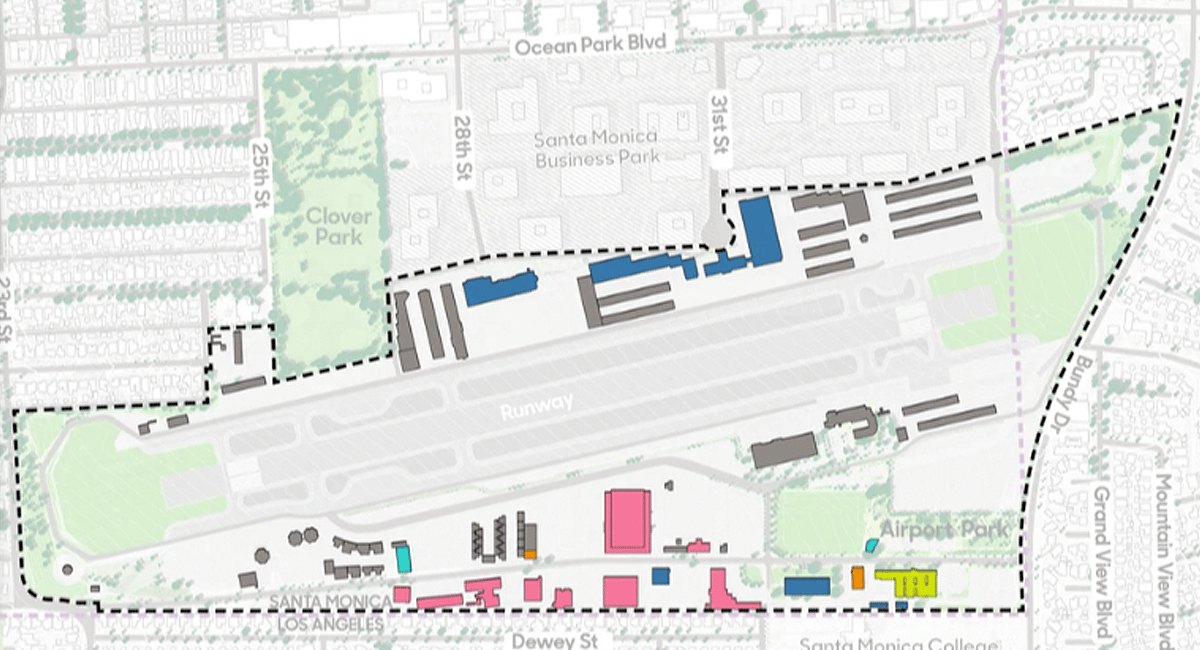
Santa Monica is in the middle of a rare civic moment: a large, centrally located site that could shift from aviation to a major public park. Done well, it’s the kind of change that doesn’t just add green space, it improves the daily experience of living nearby.
The timeline and two dates that matter most:
- The Santa Monica Airport is set to close at midnight on December 31, 2028, under the 2017 consent decree with the FAA.
- The City’s current planning process began in March 2024 and is expected to produce final recommendations and a preferred scenario by the end of 2025.
This isn’t “someday.” It’s a real planning horizon with an endpoint.
What “airport-to-park” actually means:
The City’s conversion process is built to define a preferred plan for what happens after closure, with a strong emphasis on creating a park-led future for the site.
In real life, a great park changes the Westside in ways that feel surprisingly immediate:
- A daily walk that feels restorative, not like you’re dodging traffic
- More room for kids, dogs, and runners without crowding sidewalks
- Better space for community events without closing major streets
- A more comfortable local microclimate with shade and planting
This is not about “reinventing” Santa Monica. It’s about giving the city a bigger, calmer outdoor living room.
The home value effect:
When a city adds high-quality open space, it tends to strengthen what buyers already pay attention to: beauty, access, and everyday livability. Multiple studies in real estate and urban economics have found that proximity to well-designed parks and open space is often associated with higher sale prices for nearby homes, especially when the park is attractive, well-maintained, and easy to access.
The important nuance: the size of the effect varies by neighborhood, park design, and how the park is managed. But the direction is consistent. People value being near great open space.
What residents should watch as plans take shape:
If you want to track whether this becomes a “great park” in the way people hope, keep an eye on specifics, not just big renderings:
- Edges and entrances: Does it feel welcoming and safe from every side?
- Shade strategy: Trees, canopies, and seating that work on hot days
- Everyday uses: Play, walking loops, sports, quiet zones, community gathering
- Connectivity: Safe routes in and out for pedestrians and cyclists
- Maintenance plan: The unglamorous detail that determines whether it stays beautiful
The takeaway:
Santa Monica’s airport-to-park plan is a long-term quality-of-life upgrade with a clear clock: recommendations targeted by end of 2025 and airport closure set for December 31, 2028. If the design and operations are done thoughtfully, the result is a more breathable daily routine and a built-in amenity that tends to support stronger home values over time.