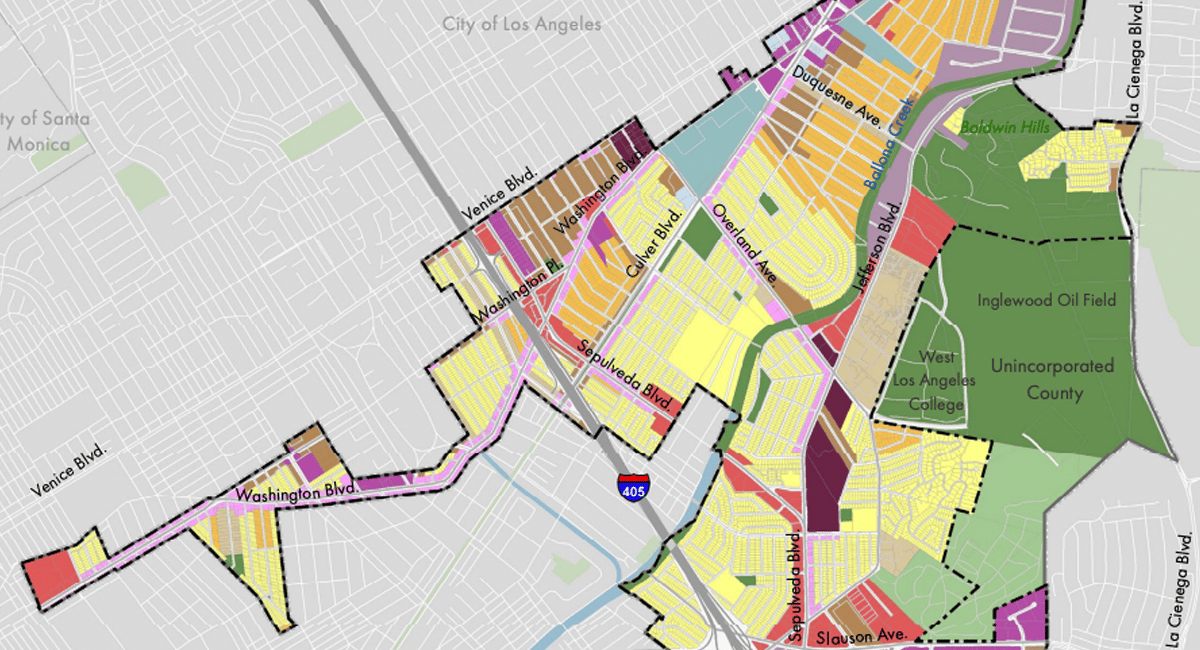
Culver City has a rare talent for feeling polished without feeling precious, a place where an errands run can look suspiciously like a lifestyle. General Plan 2045 is the city’s long-view commitment to protecting that ease while guiding what comes next, from streets and parks to housing and design.
As the City puts it, “The Culver City General Plan 2045 is the umbrella document that allows the City to plan for future development.” It’s also in effect as of October 9, 2024.
What this plan actually does:
Think of it as a coordinated design brief for the next two decades, aligning land use, mobility, housing, and public space so the city evolves intentionally instead of accidentally. Culver City’s public overview describes the General Plan as “a broad, long-range policy document that guides future development.”
In daily life, that tends to mean:
- Clearer rules for what gets built, where, and why
- More predictable decision-making (for residents and buyers alike)
- A stronger focus on comfort: shade, safety, access, and public space that feels finished
“Broad, long-range” is planning’s way of saying: fewer surprises, more coherence.
Mobility that supports a gentler routine:
Culver City isn’t guessing about street improvements. It’s already building them. The City’s Downtown Corridor page describes MOVE Culver City as “a mobility project that envisions a city where everyone can move better, safely, comfortably, reliably and with more joy.”
A near-term milestone: the Eastern Segment of the Downtown Corridor project is expected to start construction in January 2026.
What this unlocks over time:
- Easier “walk-and-roll” connections between downtown, the Arts District, and transit
- Streets that feel calmer and more legible (especially at intersections)
- A city that’s easier to enjoy on foot, not just pass through
How this can support higher home values:
Plans like this tend to strengthen what buyers pay for most: access and quality of life. Research on walkability repeatedly finds price premiums for homes in more walkable places.One national analysis estimated that, in many markets, above-average walkability translated into a several-thousand-dollar price premium, roughly $4,000 to $34,000, compared with similar homes in more car-dependent areas. Other research summaries also link higher walkability scores with higher home values, showing an “access premium” that shows up again and again across markets.
The takeaway:
General Plan 2045 is Culver City choosing a future that feels curated: thoughtful growth, stronger public spaces, and mobility that makes everyday life smoother. It’s less about changing the city’s personality and more about refining what already works, beautifully.
https://www.culvercity.gov/Services/Building-Development/General-Plan