Craving clean lines, sunlit rooms, and a true indoor-outdoor feel? In Mar Vista, mid-century homes deliver that timeless look along with Westside convenience. Whether you love a preserved classic or a thoughtful update, you’ll find options across compact originals and larger reimagined residences. In this guide, you’ll learn where to find them, what they typically cost, and what to consider before you buy or renovate. Let’s dive in.
Why Mar Vista mid-century stands out
Mar Vista’s best-known mid-century pocket grew from a clear vision: modern, efficient homes designed for everyday living. The Gregory Ain Mar Vista Tract, built in 1947–48 with landscape design by Garrett Eckbo, emphasized flexible interiors and a shared landscape pattern that felt unified and calm. The tract later became Los Angeles’ first modern Historic Preservation Overlay Zone (HPOZ), reflecting its social and design importance. You still see the original intent today in simple forms, natural light, and easy yard access that make daily life comfortable.
Where to find mid-century homes
Gregory Ain Mar Vista Tract (HPOZ)
If you want the most intact examples in one walkable area, start here. The tract features modest, modern homes with sliding partitions, large panes of glass, and low profiles that connect to the outdoors. Learn more about its history and significance through the LA Conservancy’s Mar Vista Tract overview. For a simple field route, many guides describe the tract as bounded by Beethoven Street, Palms Boulevard, Marco Place, and Meier Street, with the model house on Moore Street; this block cluster is a reliable starting point for a design-focused stroll, as noted by PBS SoCal’s SoCal Wanderer guide.
North of Venice Boulevard pockets
Outside the HPOZ, you’ll find scattered mid-century and ranch-era homes across Westdale, Mar Vista Hill, and the Marine/Marco/Meier/Beethoven corridors. Many are updated, some remain close to original. North of Venice Boulevard holds most of the area’s single-family blocks, so it is often the best shorthand for mid-century hunting. City survey work identifies several post-war tracts in the broader planning area, summarized in the SurveyLA report for Palms–Mar Vista–Del Rey.
Multi-family mid-century context
Much of south-of-Venice Boulevard includes multi-family buildings from the 1950s and 1960s. These are worth noting if you appreciate mid-century character in low-rise apartment architecture. The Barrington Multi-Family Residential Historic District is a documented example in local survey materials, also covered in the SurveyLA report.
What these homes look like
Signature design features
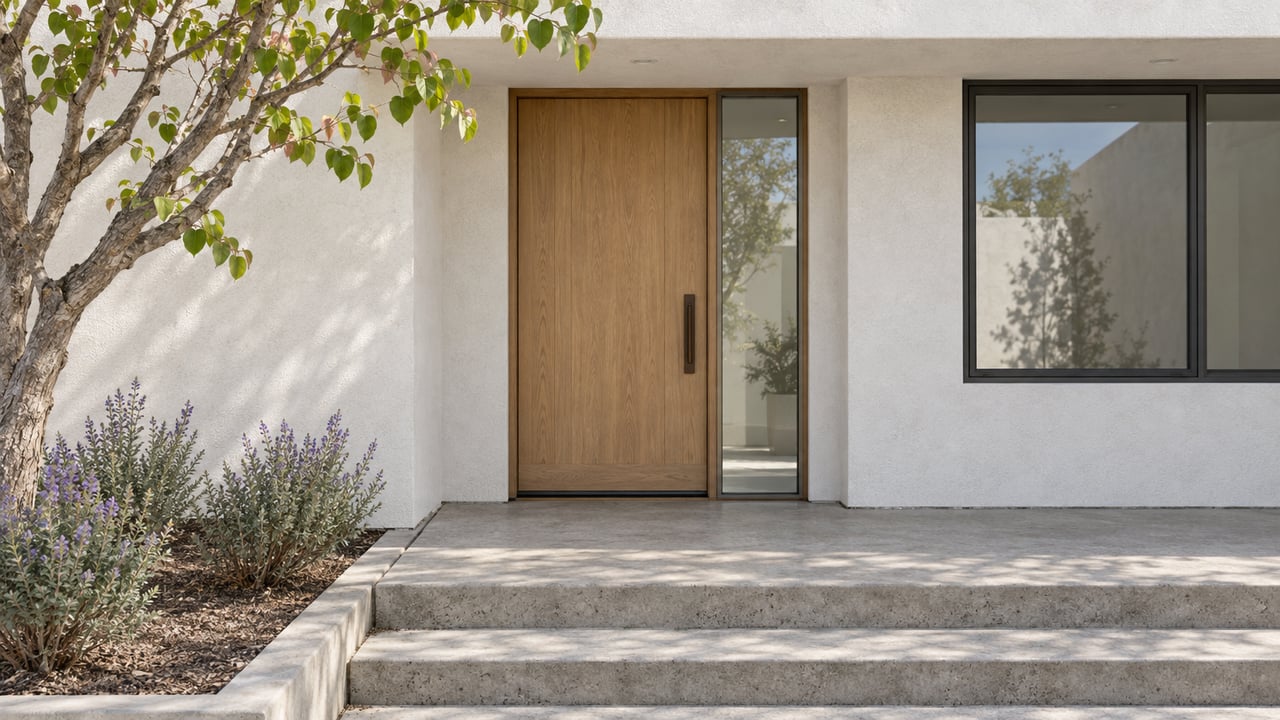
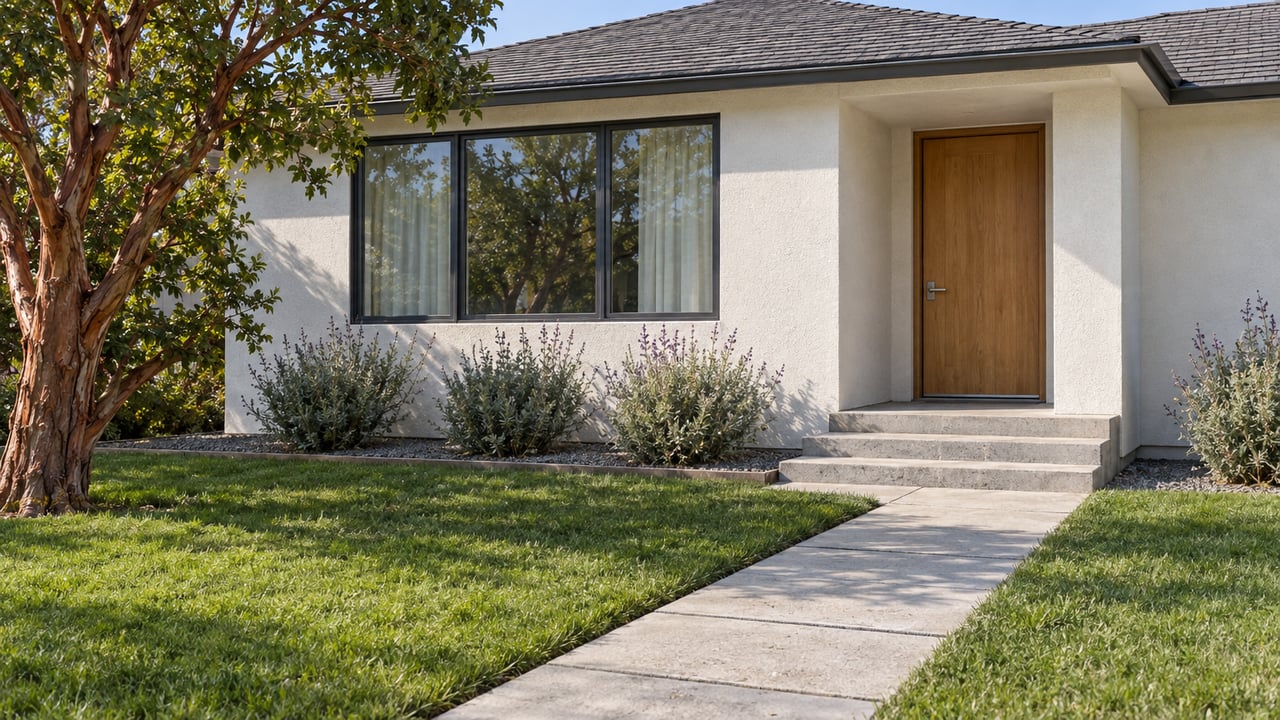
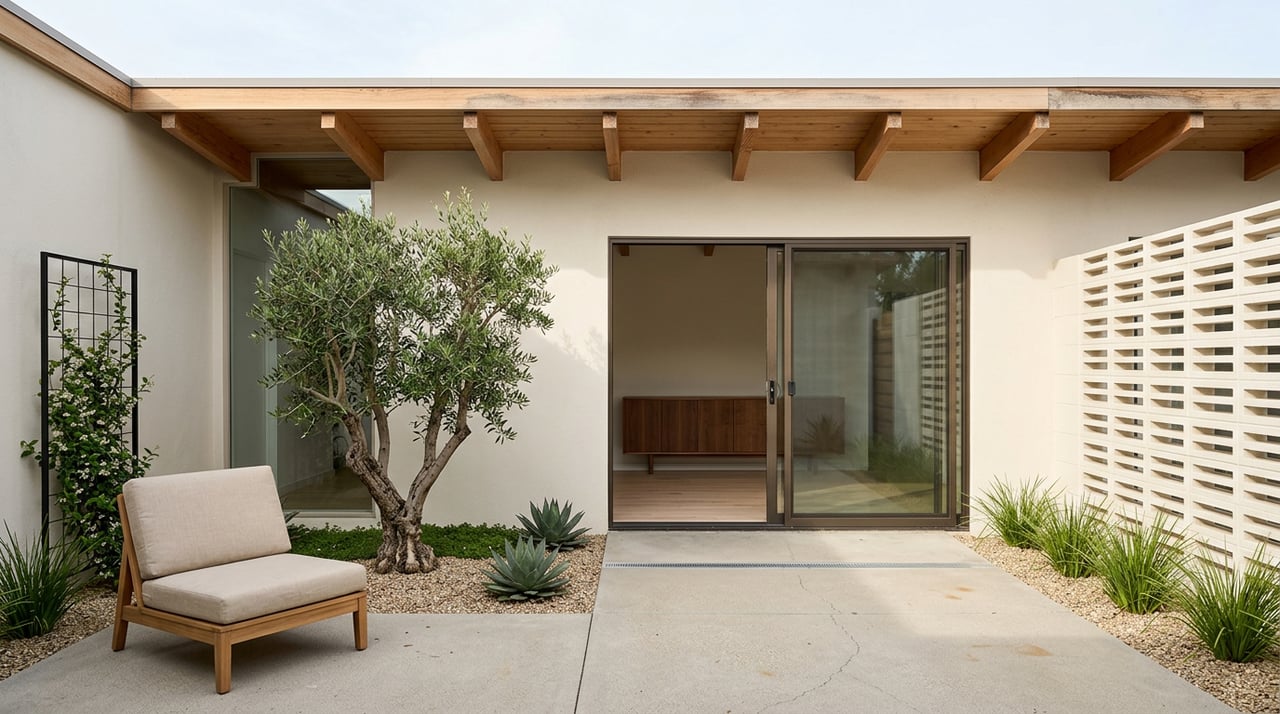
Mar Vista mid-century homes tend to be single-story or low profile, with simple wood framing and flat or low-pitched roofs. You will often see wide overhangs, clerestory or ribbon windows, and big sliders that frame the yard. Interiors lean warm and efficient, with exposed ceilings, built-ins, and a restrained materials palette like stucco and wood. Period examples sometimes include terrazzo or simple concrete floors.
Flexible, livable plans
Many original homes are compact, roughly 900 to 1,600 square feet in the tract-style examples. Sliding and folding walls were used to adapt rooms to daily life, a clever way to maximize smaller footprints. That flexibility, paired with strong connections to patios and gardens, helps these homes live larger than the square footage might suggest.
Preservation and HPOZ
If you value authenticity, the HPOZ helps maintain the tract’s character by reviewing exterior changes. Owners still update interiors for modern comfort, but the goal is to preserve defining features wherever feasible. If you are exploring historic districts across Los Angeles, the City’s Local Historic Districts page is a helpful starting point for understanding process and guidelines.
Prices and value today
As of early 2026, Mar Vista’s market remains competitive. Neighborhood snapshots report a median sale price near 2 million dollars, with median price per square foot in the low-to-mid 1,000s and median days on market around the low-50s. Typical home value estimates track in the mid to high 1.8 million range. These figures shift month to month, but they show that buyers pay a premium for Westside location and design-forward properties.
Recent small-footprint examples
Recent sales illustrate how compact mid-century homes can still command strong prices:
- 3324 Beethoven St, 1,156 sq ft, sold March 12, 2026 for $2,390,000.
- 3751 Moore St, 1,071 sq ft, sold February 27, 2026 for $1,770,000.
- 3461 Ashwood Ave, 998 sq ft, sold March 6, 2026 for $1,500,000.
These examples highlight a key theme: buyers value design pedigree and location as much as raw square footage.
How Mar Vista compares nearby
Relative to nearby Westside areas, Mar Vista’s medians often come in somewhat below or in line with Venice and below many Santa Monica averages, while still posting high per-square-foot values. The takeaway is simple: you may find more mid-century options and potential value plays in Mar Vista, but expect pricing that reflects Westside demand. Always review current neighborhood metrics right before you make an offer, since conditions move quickly.
The new-build premium
Across the Westside, teardowns and major rebuilds remain common. Larger, fully reworked or new homes in Mar Vista regularly trade in a premium band, often 3 to 5 million dollars, based on recent examples. This dynamic fits a broader trend that Los Angeles Magazine has covered, where builders maximize lot value and area, sometimes called the “Great White Box” trend, discussed in this overview of teardown-to-new-build patterns. For buyers, it means fewer intact originals outside protected tracts, along with clear price tiers for preserved, remodeled, and newly built homes.
Renovation and ownership considerations
Budget the right scope
Many buyers modernize systems, kitchens, and baths while honoring the home’s character. In Los Angeles, a mid-range kitchen remodel often runs tens of thousands of dollars, commonly in the 35,000 to 90,000 range, with high-end projects going higher. Whole-house or structural work can land in the hundreds of thousands depending on scope. Use a conservative Westside multiplier for labor and permitting, and review local cost ranges like this Los Angeles renovation guide.
Seismic basics
For post-war homes, ask early about foundation condition and prior retrofits. Basic bolt-and-brace work for a single-family home often falls in the low thousands to low five figures, while more complex soft-story or multi-unit retrofits can cost significantly more. To orient yourself, review state resources like the California Earthquake Authority information hub, and consult a structural engineer with local retrofit experience.
ADU potential and permitting
An accessory dwelling unit (ADU) can transform a compact lot’s usability and value. California and Los Angeles allow ADUs broadly, but design review can apply in historic districts. If you are considering an ADU or exterior addition, review the Los Angeles Municipal Code provisions on ADUs and confirm whether an HPOZ applies to your property so you plan timelines and compatibility requirements correctly.
Tax and preservation incentives
Some historic properties benefit from Mills Act contracts, which can reduce property taxes in exchange for preservation commitments. Not every property qualifies, and enrollment is a separate process. For background and examples, see the City’s Mills Act program assessment report and consult City Planning for current eligibility and procedures.
Smart buying playbook
- Confirm historic status early. Check if the home lies inside the Gregory Ain HPOZ or another local district using the City’s Local Historic Districts page. This affects exterior approvals and can support a preservation-minded plan.
- Order the right inspections. Ask for foundation and structural reports, and consider a structural engineer for homes built before 1978. A quick review of state guidance from the California Earthquake Authority helps you frame retrofit questions.
- Budget for systems and livability. Set a realistic remodel range for kitchens, baths, windows, insulation, and HVAC using local references like this LA cost guide. Plan extra time if exterior changes need HPOZ review.
- Think ADU strategy. If an ADU fits your goals, review LAMC ADU rules and coordinate design for historic compatibility where required.
- Consider financing and appraisal. Architecturally unique homes can appraise differently than generic comparables. If you plan a major remodel, explore renovation or construction loan options early and build realistic timelines.
Mar Vista’s mid-century homes pair enduring design with Westside convenience. Whether you want an original Gregory Ain “Modernique” home or a respectful update with more space, you have strong options across the north-of-Venice neighborhoods. If you are ready to tour on- or off-market opportunities and plan the right strategy, connect with the Bellet/Grakal/Glick Real Estate Group for responsive, concierge-level guidance.
FAQs
Where can you see the best intact mid-century homes in Mar Vista?
- The Gregory Ain Mar Vista Tract is the most concentrated example, and additional mid-century houses appear north of Venice Boulevard in areas like Westdale and Mar Vista Hill.
How much do mid-century homes in Mar Vista cost today?
- As of early 2026, the median sale price is near 2 million dollars, with price per square foot typically in the low-to-mid 1,000s; compact originals and thoughtfully updated homes can command strong prices.
What is the Gregory Ain Mar Vista Tract and why is it important?
- Built in 1947–48, the tract was designed for flexible, modern family living and later became LA’s first modern HPOZ, recognizing its design and social significance.
Are Mar Vista homes more affordable than Venice or Santa Monica?
- Mar Vista often shows somewhat lower or comparable medians to Venice and below many Santa Monica averages, while still posting high per-square-foot values due to Westside demand.
Can you add an ADU to a mid-century home in Mar Vista?
- Yes, ADUs are broadly allowed under state and city rules; if the property sits in an HPOZ, design review and compatibility standards may apply, so confirm early in your planning.
What should you check before renovating a mid-century home?
- Start with foundation and seismic assessments, then budget realistic ranges for kitchens, baths, windows, insulation, and HVAC; plan for permits and, if applicable, HPOZ review for exterior work.