Cross-shop these two neighborhoods on any portal and the story writes itself. Beverlywood's median sale price sits well north of two million dollars. Crestview's homes, just a few blocks east across Robertson Boulevard, come in at a fraction of that. The obvious read is that Crestview is the value play, the neighborhood where a buyer priced out of Beverlywood lands instead.
Pull up the price per square foot on both neighborhoods and that story falls apart. As of March 2026, Redfin had Crestview's median sale price per square foot at $994. Beverlywood's most recent reading, per the same source, was $737. The neighborhood with the lower total price tag is currently the more expensive one to build or buy by the foot.
That inversion is the whole reason this comparison matters. Buyers who anchor on the headline median walk into Crestview expecting a discount and instead find themselves paying more per square foot for a smaller house on a smaller lot. Understanding why changes how you should actually compare these two neighborhoods, and it isn't by the number you'd assume.
The Number That Flips the Story
| Crestview | Beverlywood | |
|---|---|---|
| Median sale price | $1.6M (March 2026) | $2.33M (recent Redfin reading) |
| Median $ per sq ft | $994 | $737 |
| Recent comps | 1 home sold in March 2026, down from 2 the year prior | Jan. 5, 2026 close at $2,675,000 (2,728 sq ft); Dec. 23, 2025 close at $3,000,000 (3,530 sq ft) |
Look at those two recent Beverlywood closes. Both sold for well over what Crestview's entire median price tag would buy, but both also delivered more than 2,700 square feet of house. Crestview's median $/sqft tells you that a comparably sized Crestview home would cost more to acquire on a foot-by-foot basis than either of those Beverlywood sales did.
The reason isn't mysterious once you know what's actually built on the ground in each neighborhood.
Why Crestview Costs More by the Foot
Crestview is a small neighborhood by design, roughly a square mile bounded by Pickford Street to the north, Sawyer Street to the south, Robertson Boulevard to the west, and La Cienega Boulevard to the east. Almost all of its roughly 740 homes trace back to two developer-builders, Elwain Steinkamp and William T. Richardson, who built out the neighborhood starting in the late 1930s and into the early 1940s.
Steinkamp and Richardson weren't building custom estates. They were building modest, middle-class Spanish Colonial Revival homes on efficient footprints, and they repeated a recognizable formula: L-shaped floor plans wrapped around an enclosed patio, tile roofs, arched doorways, raised plaster detailing, and a stained-glass crest set into the living room window as a kind of builder's signature. A longtime resident who bought into the neighborhood in the early 2010s and later wrote about it described the contrast plainly: Crestview's houses read as modest and middle-class, while the larger, hillier neighborhood to the west built out with a wider mix of architectural styles and bigger footprints on bigger lots.
Small, consistent lots with small, consistent houses on them create scarcity of a particular kind. When almost every home in a neighborhood was built to the same compact scale nearly a century ago, there's no large-footprint inventory to pull the per-foot price down. Every square foot in a Steinkamp house is competing against other small, similar square feet, and buyers who want that specific 1930s Spanish character, the crest window, the courtyard, the arched doorway, are bidding on a fixed and shrinking supply.
What Beverlywood's Bigger Number Actually Buys
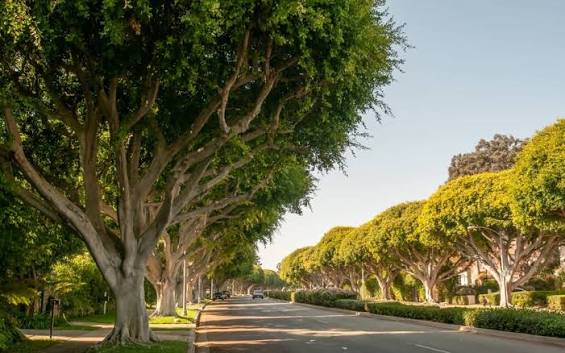
Beverlywood split off from Beverly Hills in 1940 as its own planned community, and it grew up with more room to work with: mountainous streets, cul-de-sacs, tall trees, and a housing stock that mixes styles and sizes rather than repeating one builder's template block after block. That variety is exactly why the per-square-foot price comes in lower even though the sticker price on a typical home is so much higher. A 3,530-square-foot Beverlywood house and a 1,500-square-foot Crestview house aren't competing for the same buyer or the same lot type, and averaging their prices per square foot across each neighborhood's full inventory produces two very different numbers.
The practical takeaway: a Beverlywood budget of $2.3 million doesn't just buy a bigger number on the sign. It buys a categorically different kind of house, with more square footage, more architectural range, and more room for the kind of layout changes and additions that a compact 1930s Crestview lot may not accommodate as easily.
Neither neighborhood is objectively the better buy. They're solving for different things. A buyer who wants the Spanish Colonial Revival detail and the walkable, tightly built residential grid (Crestview ranks 33rd among Los Angeles neighborhoods for walkability) is paying for scarcity and character. A buyer who wants square footage, architectural variety, and room to expand is paying for that instead, just at a lower rate per foot because there's more of it to go around.
The One Chart You Shouldn't Trust
There's a second trap in these numbers that has nothing to do with architecture and everything to do with sample size. Crestview's Redfin data for March 2026 showed a median sale price down 35.8 percent year over year. That sounds like a neighborhood in freefall. It isn't. The same report noted exactly one home sold in Crestview that month, down from two the year before.
A neighborhood of roughly 740 homes doesn't generate enough monthly transactions to support a meaningful year-over-year percentage. One expensive sale swapped for one modest sale, or vice versa, can swing the median by double digits without reflecting any real shift in what the neighborhood is worth. Beverlywood, by contrast, is a deeper market. Redfin rates it as somewhat competitive with a compete score of 49 out of 100, and homes there typically sell in around 55 days, which means its monthly medians are built on enough transactions to actually mean something.
If you're watching either neighborhood's numbers move month to month, treat Crestview's percentage swings as noise until you can see multiple months of data, and lean on the per-square-foot comparison and recent comps instead of the headline median.
Quick Questions
Is Crestview considered part of Beverlywood? No. They're adjacent but separate neighborhoods, divided by Robertson Boulevard, with Crestview to the east and Beverlywood to the west.
If Crestview costs more per square foot, is it the better long-term investment? That depends on what you value and what you can find. Crestview's fixed, aging stock of Spanish Colonial Revival homes means limited new supply, which can support pricing over time for buyers who want that specific style. Beverlywood's larger, more varied stock offers more flexibility for additions or remodels, which appeals to buyers planning to grow into a home rather than move again. Neither pattern guarantees future appreciation, and any decision about long-term value should account for your own timeline and goals.
What should I actually compare if the median price is misleading? Look at price per square foot alongside the specific comps closest to the home you're considering, and ask how many sales the median is built on that month. A neighborhood-wide $/sqft figure combined with two or three recent, similar-sized closes will tell you more than a single median ever will.
If you're weighing a Crestview Spanish bungalow against a bigger Beverlywood floor plan and want someone to walk the actual comps with you street by street, that's exactly the kind of decision Zack Grakal and the BGG team spend their days on. Get Your Instant Home Valuation to see where your current home or target budget actually lands in either market, then let's talk about which neighborhood fits what you're trying to buy.